One approved truth
A corrected value updates every connected form and attachment.
A Cynsta product
For legal, compliance, and private-client teams that must turn sensitive source material into defensible ownership records and filing-ready packages.
System of record
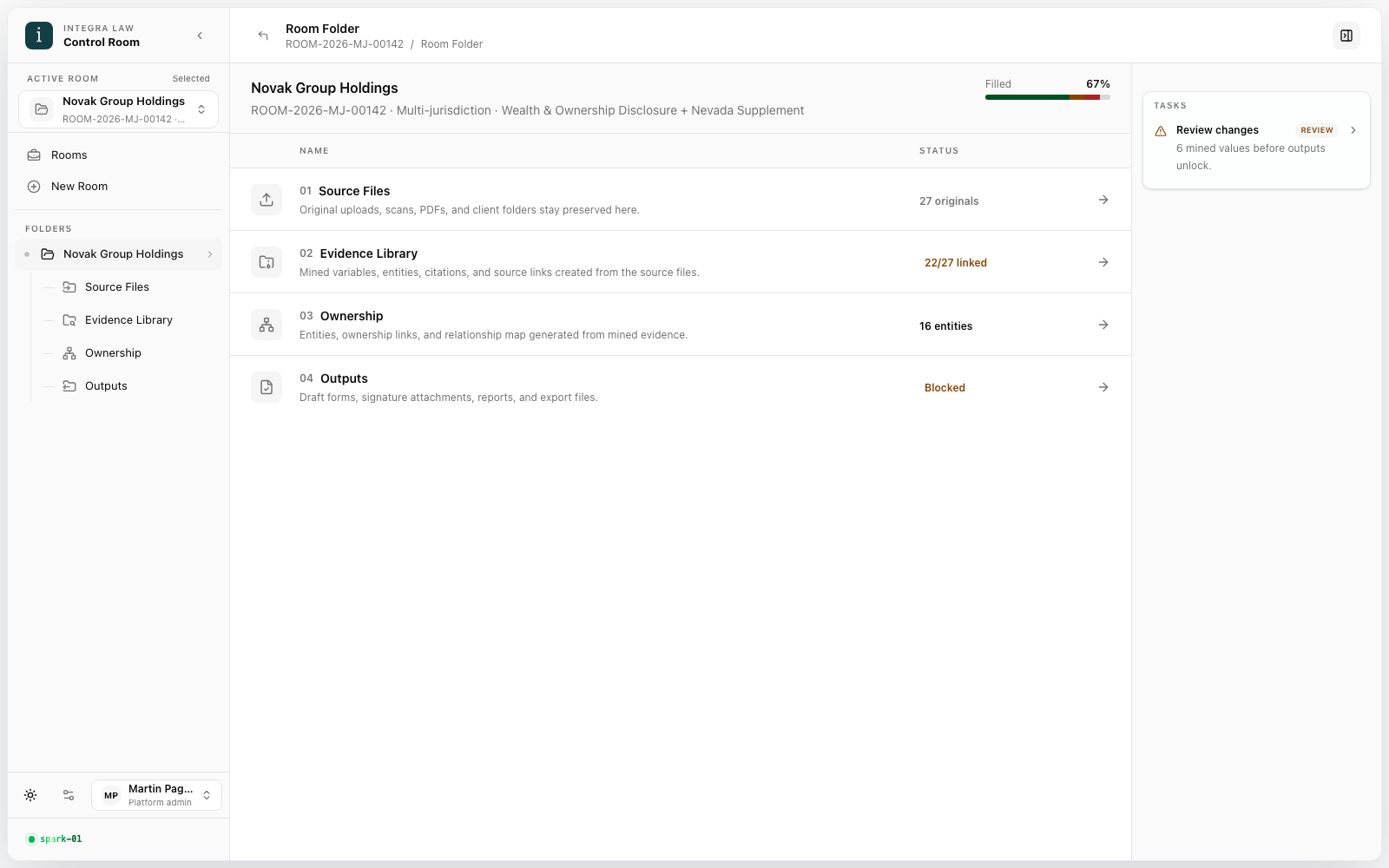
Instead of moving facts between folders, spreadsheets, and forms, the team works from one governed room. Originals, evidence, decisions, and outputs stay connected.
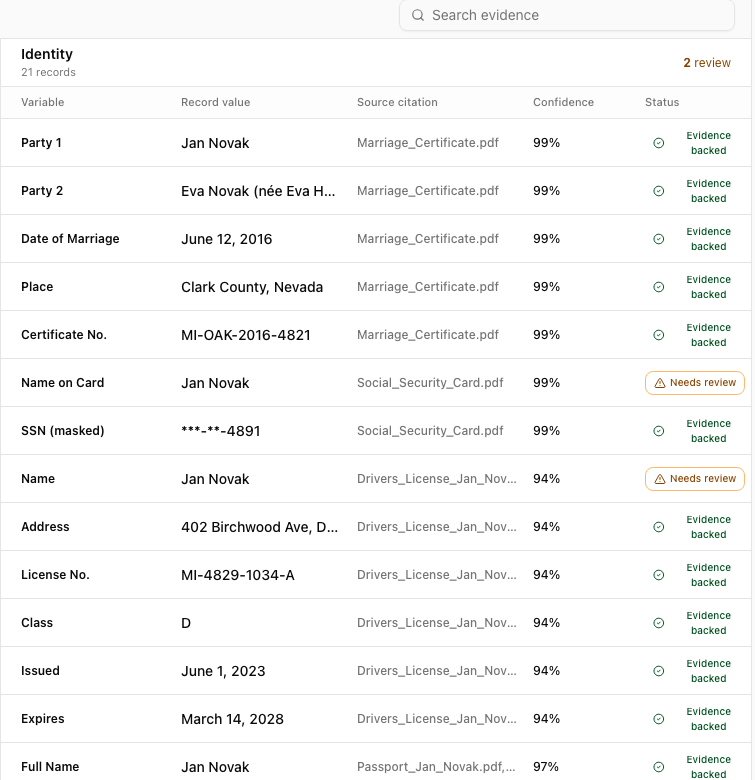
Evidence
Every variable carries a citation, confidence, and review state. A reviewer can open the source document and linked record from the same row.
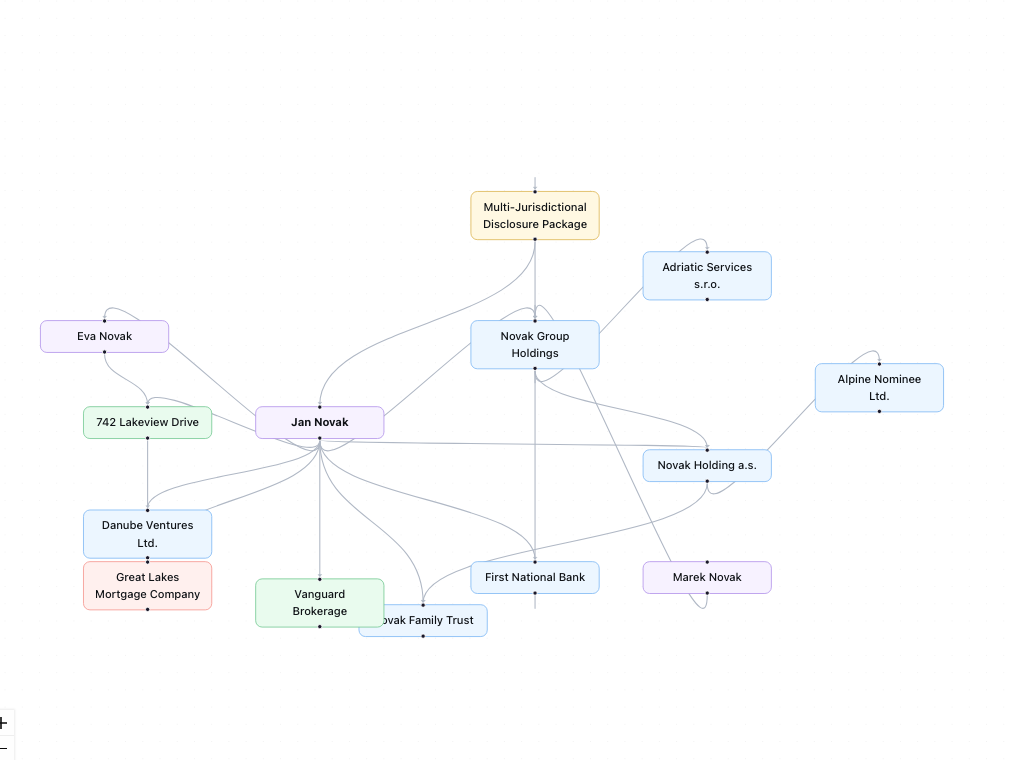
Ownership
People, companies, assets, and links exist as records and as a map. One approved correction updates every connected output.
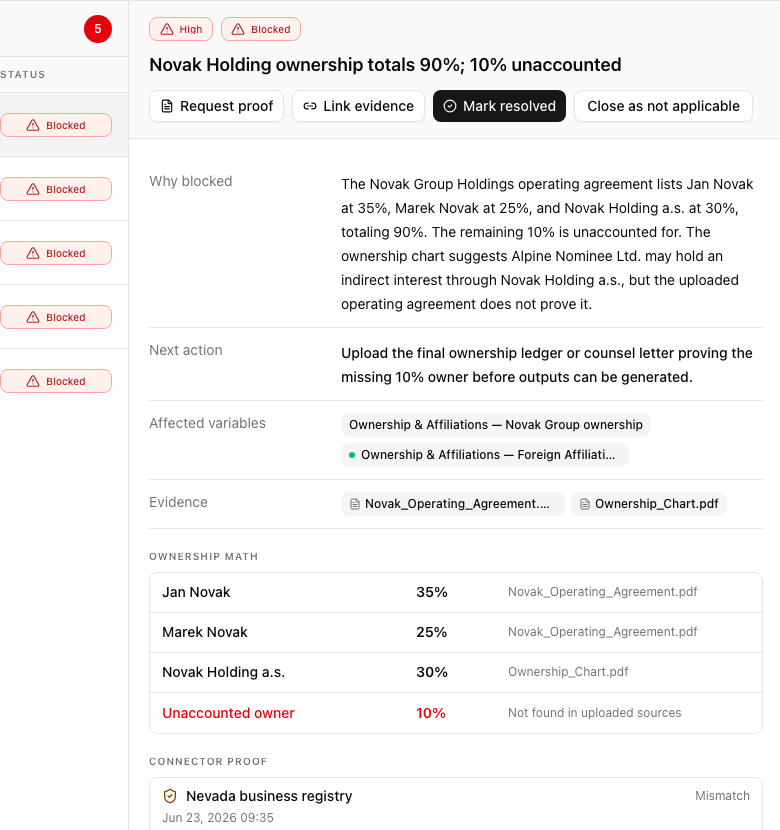
Release gate
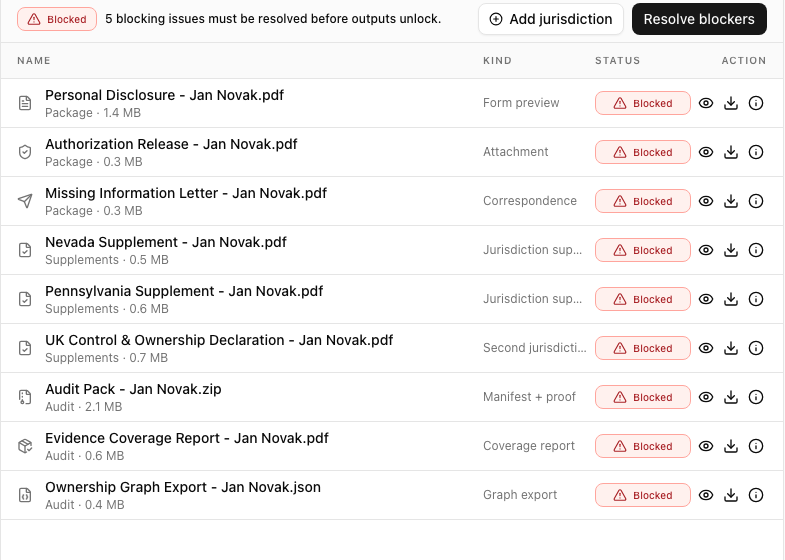
Output
Forms, attachments, coverage reports, and the audit pack are generated from the same approved variables.
Why teams buy it
A corrected value updates every connected form and attachment.
Source, change, reviewer, and release gate stay with the matter.
Ownership structures and filing maps can be governed and reused.
Filing templates
Start with wealth and ownership disclosure. Each jurisdiction package is a versioned map of fields, attachments, validations, and release rules.
Deployment
Run on an on-premises appliance or in your cloud account. Documents, mined values, and model jobs stay inside the approved infrastructure.



First deployment
The first deployment is not a transformation program. Select one filing type, one existing client folder, and one accountable review team.
Fields, attachments, validation rules, and the release gate.
Compare coverage and accuracy with the current process.
Roles, audit, deployment, and the next jurisdiction.
FAQ
A controlled workspace for one matter, its source files, evidence, ownership records, decisions, and final filing package.
No. A value without acceptable evidence remains in review or creates a blocker. A human must approve consequential variables.
As a versioned template with fields, attachments, validation rules, and a release gate. The same approved data can feed multiple jurisdiction outputs.
On one approved matter, measure coverage, field accuracy, unresolved blockers, and time to a review-ready package.